
Why choose us?
Modern techniques
We actively learn and adopt the advanced technology of various countries, combining the high precision of the new technology developed by our company, and according to the customer's problems, so as to develop automation equipment machines suitable for customers.
Fast delivery
After both sides sign the contract, all equipment will be delivered in 1-10 days except for non-standard equipment, which is determined on specific situation!
Safe and secure
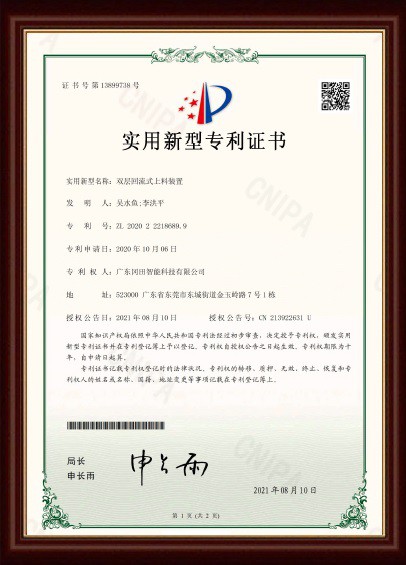
We have been certified as a national high-tech enterprise for many consecutive years and owns more than 70 patents, including more than 30 invention patents and software copyrights.
Strict quality control
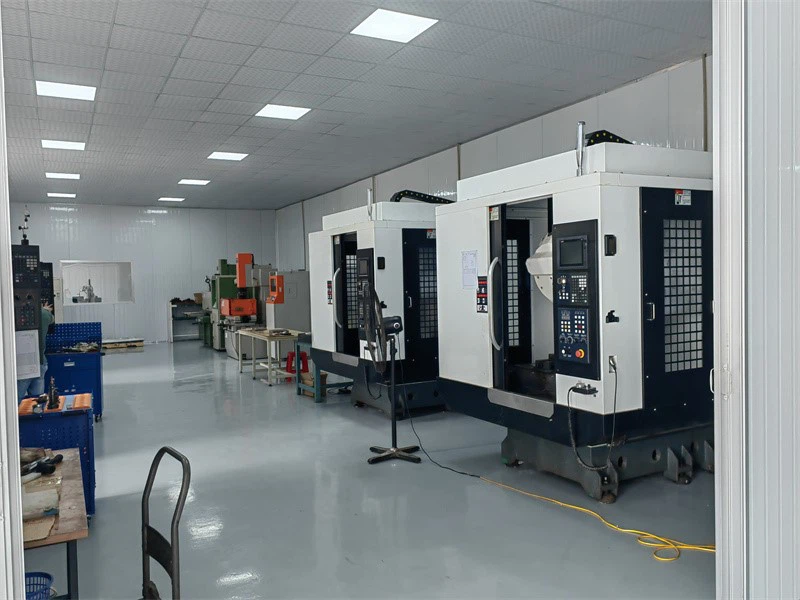
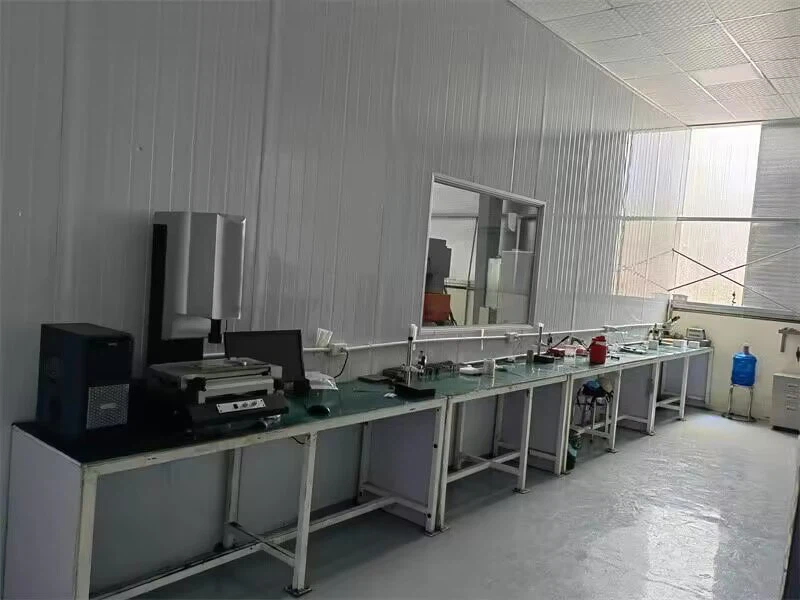
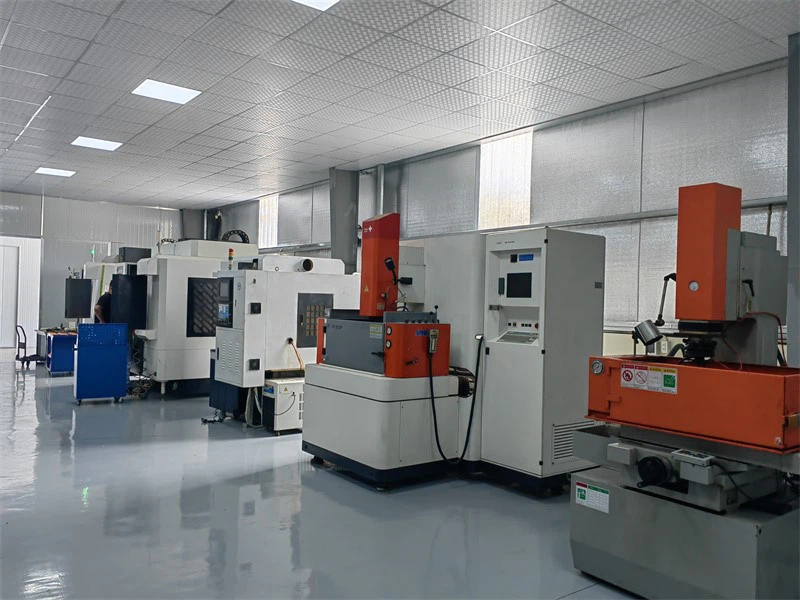
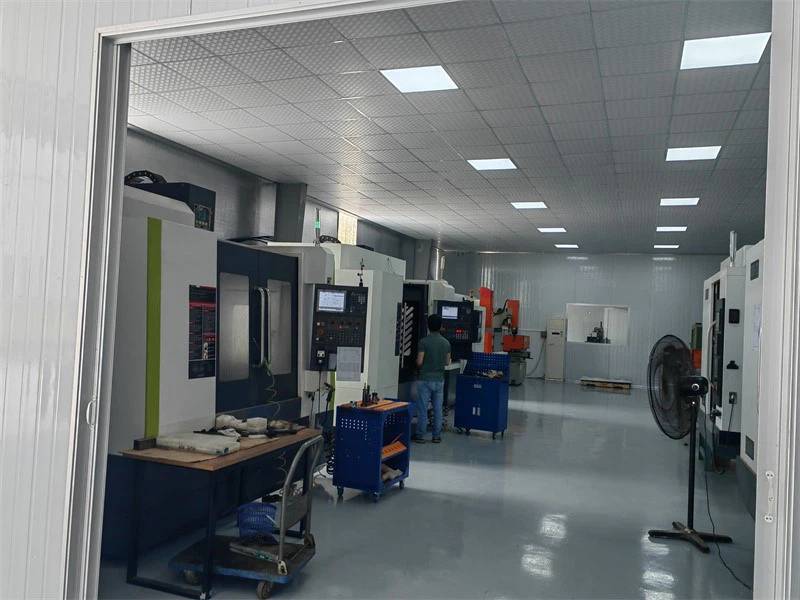
We have our own processing workshop and testing instruments. Our equipment testing process is strict, including raw material testing, production process testing, and joint testing by various departments before shipment, with layers of checking.
-
![Automatic Soldering Machine with Double Y-axis]() Automatic Soldering Machine with Double Y-axisThis series of equipment is the automatic soldering machine with double Y-axis and double working platforms. By feeding product at the pre-process and taking product at the post-process, itsread more
Automatic Soldering Machine with Double Y-axisThis series of equipment is the automatic soldering machine with double Y-axis and double working platforms. By feeding product at the pre-process and taking product at the post-process, itsread more -
![Automatic Soldering Machine]() Automatic Soldering MachineThis series of equipment belongs to single Y-axis single workbench soldering machines, supporting both spot welding and drag welding functions. The soldering tips can be customized according toread more
Automatic Soldering MachineThis series of equipment belongs to single Y-axis single workbench soldering machines, supporting both spot welding and drag welding functions. The soldering tips can be customized according toread more -
![Automatic Soldering Machine with Double Heads]() Automatic Soldering Machine with Double HeadsThis series of equipment is the automatic soldering machine with double Y-axis and double workbenches. The size head works at the same time, and the efficiency is twice as high as that of the singleread more
Automatic Soldering Machine with Double HeadsThis series of equipment is the automatic soldering machine with double Y-axis and double workbenches. The size head works at the same time, and the efficiency is twice as high as that of the singleread more -
![Online Automatic Soldering Machine]() Online Automatic Soldering MachineThe online automatic soldering machine is a highly automated welding device capable of performing functions such as automatic solder feeding and welding within production lines without manualread more
Online Automatic Soldering MachineThe online automatic soldering machine is a highly automated welding device capable of performing functions such as automatic solder feeding and welding within production lines without manualread more -
![Y-axis Automatic Flip Soldering Machine]() Y-axis Automatic Flip Soldering MachineThe Y-axis automatic flip soldering machine is specifically designed for heavy-duty production scenarios requiring floor-mounted, dual-side soldering of products and fixtures. By automating workflowsread more
Y-axis Automatic Flip Soldering MachineThe Y-axis automatic flip soldering machine is specifically designed for heavy-duty production scenarios requiring floor-mounted, dual-side soldering of products and fixtures. By automating workflowsread more -
![Floor-type Laser Soldering Machine]() Floor-type Laser Soldering MachineThis equipment is used in wires, battery connector plugs, rigid and flexible boards, car lights, LED lights, USB connectors, capacitors and resistors, Bluetooth headsets, etc.read more
Floor-type Laser Soldering MachineThis equipment is used in wires, battery connector plugs, rigid and flexible boards, car lights, LED lights, USB connectors, capacitors and resistors, Bluetooth headsets, etc.read more -
![Automatic Laser Soldering Machine for Module]() Automatic Laser Soldering Machine for ModuleThis equipment is suitable for the assembly of soft pack power battery module section, which mainly has battery automatic loading, pole lug laser welding, battery stacking, laser welding manifold,read more
Automatic Laser Soldering Machine for ModuleThis equipment is suitable for the assembly of soft pack power battery module section, which mainly has battery automatic loading, pole lug laser welding, battery stacking, laser welding manifold,read more -
![Laser Soldering Machine for PCB]() Laser Soldering Machine for PCBLaser soldering machine for PCB is an online operation equipment, which is required to be embedded in the assembly line and flow into the next station after completing the soldering process. It isread more
Laser Soldering Machine for PCBLaser soldering machine for PCB is an online operation equipment, which is required to be embedded in the assembly line and flow into the next station after completing the soldering process. It isread more -
![Laser Soldering Machine for Electronic Instruments]() Laser Soldering Machine for Electronic InstrumentsLaser soldering machine for electronic instruments is capable of soldering a variety of precision instrument products, including instrumentation, medical equipment, sensors, and other electronicread more
Laser Soldering Machine for Electronic InstrumentsLaser soldering machine for electronic instruments is capable of soldering a variety of precision instrument products, including instrumentation, medical equipment, sensors, and other electronicread more -
![Laser Soldering Machine for Tin Wires]() Laser Soldering Machine for Tin WiresLaser soldering machine for tin wires consists of semiconductor laser welding system, CCD vision positioning, precision solder wire feeding mechanism, double station and working table, motion moduleread more
Laser Soldering Machine for Tin WiresLaser soldering machine for tin wires consists of semiconductor laser welding system, CCD vision positioning, precision solder wire feeding mechanism, double station and working table, motion moduleread more


A soldering machine is any piece of equipment used for the purpose of soldering, in which a metal alloy - traditionally made from tin and lead - becomes a filler material that is primarily used to create a soldered joint between two components. The most common purposes of this are to build a smooth connection between two different pieces of metal or to support the continuation of electrical conductivity.
Benefits of Soldering Machine
Productivity
The first thing that an automatic soldering machine ensures is productivity. Automated systems provide a smooth workflow preventing bottlenecks and increasing the output.
Manual soldering is reasonably accurate, but it is not as consistent. The outcome is significantly affected if the staffing is unavailable on an important closing day. In comparison, automated systems are much more reliable.
Safety
Soldering consists of a heated rod that melts the filling metal to join the parts. Sometimes the process results in burns and injuries, ultimately affecting the final output. In comparison and automatic solder is resistant to such problems and ensures optimal production rate.
Economic
Although the initial upfront of the soldering machines looks expensive, they prove cost-effective in the long run. The devices consist of AI-powered systems which you can program easily. It saves recruitment and training costs, an extensive expense in manual soldering.
A well-programed soldering robot adapts to the techniques quickly, and its production balances the price spent on its purchase.
Works without supervision
Automated systems don’t require monitoring because they are programmed to adapt. An automatic solder will save you the workforce cost and other related expenses. Since the machines are independent of human supervision, they can work easily after closing hours with minimal staff (for safety).
Upgradeable
Upgradation is a continuous requirement in industrial settings. However, retraining manual staff requires much time and costs. Automatic systems are more easily upgradeable as you only need the budget for retraining or upgrading the machine’s software.
Good products
Manual soldering was a common practice. However, observations show that the products varied from worker to worker.
The experienced soldering staff produced more coherent and high-end results, while the newly recruited ones needed to improve product quality. Automatic soldering machines eliminate such misbalances, ensuring more identical products every time.
Additional tasks
An automatic soldering machine is capable of handling various additional tasks as well. They can perform spot welding, component cleaning and drag welding, etc., which are not doable during complicated soldering.
Types of Soldering Machine

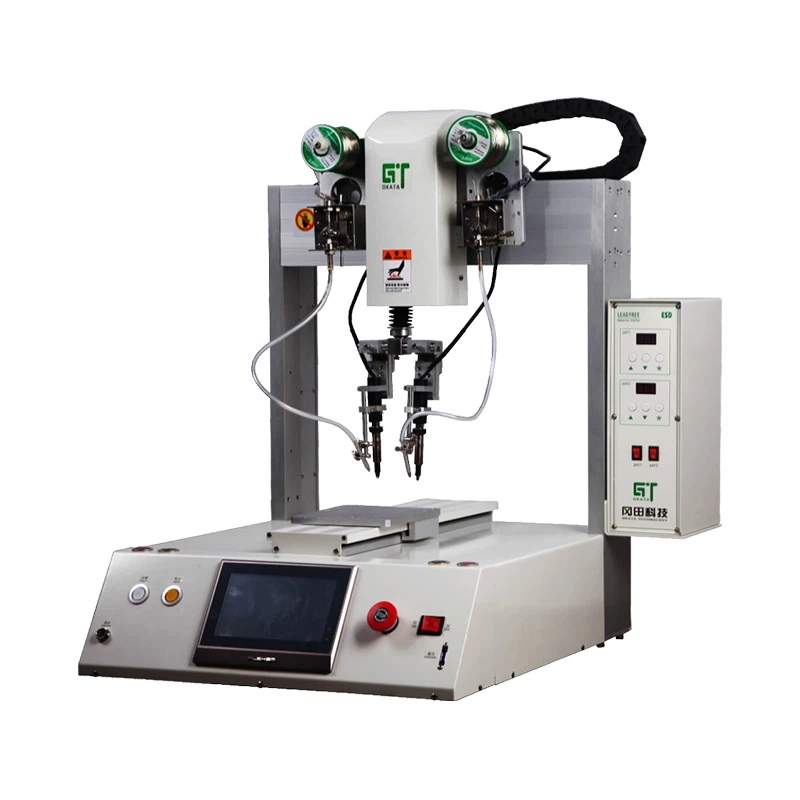
Soldering iron
Handheld soldering irons are one of the most basic and widely used types of soldering machines.
They consist of a heated metal tip connected to a handle and are powered by electricity.
Soldering irons are versatile and suitable for a wide range of soldering tasks, from simple repairs to intricate circuit board assembly.
Soldering station
A soldering station is a more advanced version of a soldering iron, typically featuring temperature control and additional features such as interchangeable tips and digital displays.
Soldering stations offer improved precision and consistency in temperature regulation, making them ideal for professional and high-volume soldering applications.
Hot air rework station
Hot air rework stations use a stream of heated air to melt solder and remove or replace surface-mount components on circuit boards.
They are commonly used for tasks such as desoldering and reflowing surface-mount components like integrated circuits (ICs), resistors, and capacitors.
Soldering robot
Soldering robots, also known as automated soldering systems, are programmable machines equipped with robotic arms and soldering heads.
These machines are used in high-volume manufacturing environments to automate the soldering process, improving efficiency and consistency while reducing labor costs.
Wave soldering machine
Wave soldering machines are used in large-scale electronics manufacturing to solder through-hole components on printed circuit boards (PCBs).
These machines employ a conveyor system to move PCBs over a wave of molten solder, ensuring efficient and uniform soldering of components.
Reflow soldering oven
Reflow soldering ovens are used in surface-mount technology (SMT) assembly processes to solder surface-mount components onto PCBs.
These ovens utilize controlled heating and cooling cycles to melt solder paste and create reliable solder joints between components and PCB pads.
Ultrasonic soldering machine
Ultrasonic soldering machines utilize high-frequency vibrations to create frictional heat at the solder joint, enabling rapid soldering of small components and delicate materials.
These machines are often used for precision soldering applications in industries such as microelectronics and medical device manufacturing.
A soldering machine is a piece of equipment that heats the solder alloy material into a liquid state (at around 600 degrees Fahrenheit) and then applies the melted materials to fill the space between the two target components. The liquid is then allowed to cool and bond, creating a permanent join - although solder material can be removed if reheated back to a liquid state.
While lead was traditionally used for soldering, changing regulations mean that non-lead alternatives are now commonly utilized. They include antimony, bismuth, brass, copper, indium, tin and silver.
The definition of a soldering machine could cover anything from a simple soldering pencil or handheld soldering gun to an industrial soldering machine. The best machinery will include workstations and allow you to benefit from automatic dip solders and angle turns, allowing you to focus only on putting the coil to the fixture and subsequently unloading the finished piece by hand.
Soldering processes also need to use a flux, which removes the oxide films that naturally form on metal surfaces during the soldering process. In turn, the flux increases the wetting ability of the solder metals, which promotes a smoother application. A type R rosin flux is the most basic version although no-clean, water soluble, IPC J standard flux materials are also used in some soldering machine applications.
Application of Soldering Machine
Soldering is often used in the roofing industry when making flashing or fusing together components of a copper roof. If you're doing soldering for a roof, it doesn't require as much fine detail and accuracy as working with circuit boards and other smaller components, so the typical soldering tool has a broad tip that heats up very quickly and maintains a high temperature. There are also metal gutters for residential homes that are held together with a soldered joint. When soldering is used for gutters, it creates a permanent, leak-proof bond that helps to reduce water damage and keeps your home running smoothly.
The metal that's used in soldering is generally too soft to make engine repairs that are going to last, but you can still use soldering irons for smaller tasks. Most of the metal joining work in automobiles is performed by acetylene torches and other traditional welding methods, but you can use soldering metal to fill in irregular cavities in the engine, tighten joints, or smooth out any rough edges. Soldering is also used in automobiles to make repairs to the electrical systems.
Just like soldering is often used in electronics to create circuit boards, electricians also use it for detailed work, such as splicing wires for residential or commercial wiring. Soldering is also used to fuse together wires in electrical terminals or control panels and attach connectors to cables.
Jewelers often use soldering pens or soldering irons that have interchangeable tips so they can have better precision when working with jewelry. There is usually a high percentage of silver in this type of soldered, and jewelers commonly use borax flux to help reduce oxidation and maintain quality.
Stained glass windows and mosaics often call for a soldering iron to join the separate pieces of coloured glass together. This is the type of project that can be done at home for fun, or you can purchase stained glass or mosaics that had been done professionally. Any type of art that consists of metal joined together may call for a soldering pencil, soldering gun, or soldering iron.
Components of Soldering Machine
Soldering iron
There is little or nothing you can do without an electronic soldering iron. For beginners, you do not need to purchase a very expensive one.
Wire cutter
The wire cutter is a handy little soldering component. It is used to cut or remove the end of a wire. They are also referred to as electronic clippers or snippers. Alternatively, you can also go for something similar and much easier which is a wire stripper.
Soldering tools for desoldering
Sometimes you may make mistakes in the process of soldering, and you need to replace such components in a circuit. This implies that you have to desolder it to fix it appropriately. Two tools are needed for desoldering and these are solder sucker and solder wick.
●Solder sucker: The solder sucker is also known as a solder pump which is a mechanical vacuum pump that sucks away the solder from the solder joint. The solder joint is heated to make it change to fluid then it is sucked off using the solder pump.
●Solder wick: Another tool made for removing solder is the solder wick, which is made up of copper thread that absorbs solder from the joint on the board in a circuit. This is used to remove a small quantity of solder from a solder bridge i.e. between the pins on a circuit.
Tweezers
Tweezers are components of the electronic soldering equipment that is used to keep the solder in place to avoid burning to your fingers.
USB microscope
A USB microscope is a valuable component that is used in debugging process. With the help of a microscope, you can uncover the tiny solder joints that exist between pin which is not supposed to be there. This component is useful for people with eye defects as this will aid them in doing the work perfectly.
Wet sponge
A wet sponge is useful for making the tip of the soldering iron clean during the process. The tip should be clean intermittently and regularly during and after use. This usually comes with the soldering iron stand.
Soldering stand
In the course of soldering, the soldering iron becomes hot and needs to be placed in a safe place to avoid any accident. The soldering stand is ideal for this purpose.
How to Maintain Soldering Machine
Regular cleaning: Before leaving get off work every day, wipe the dust, tin slag and debris on the machine thoroughly with a clean cloth. Pay special attention to the cleaning of key parts such as the soldering head and the conveyor wheel to ensure that there is no residue.
Maintenance of the soldering iron tip: Before leaving get off work every time, wipe the excess tin slag and rosin residue on the soldering iron tip with a sponge. After the temperature drops, re-tin the soldering iron tip to maintain its good thermal conductivity and welding effect.
Lubrication maintenance: The moving parts of the Automatic soldering machine need to be lubricated regularly. For example, the gears of the tinning device should be lubricated every 2 months or so to reduce wear and extend service life.
Check the electrical system: Regularly check the sensors, switches and cables in the electrical system to ensure that they are in good condition. If damaged or aging parts are found, they should be replaced in time.
Check the power supply: Regularly check whether the power supply of the Automatic soldering machine is normal, including voltage, frequency and grounding. If there is any abnormality, you should contact an electrical engineer immediately.
Keep it clean: Keep the work area around the Automatic soldering machine clean and tidy to prevent debris or dust from entering the machine.
Keep away from external objects: Keep any external objects that may interfere with the work of the Automatic soldering machine away from the machine to ensure the safe operation of the equipment.
Operation records: It is recommended to regularly record the operation status, maintenance activities and repairs of the Automatic soldering machine. This helps to track the performance of the equipment and detect potential problems in time.
Performance tracking: By analyzing the operation records, you can understand the performance changes of the equipment, so as to take measures in advance to prevent the occurrence of failures.
Certifications



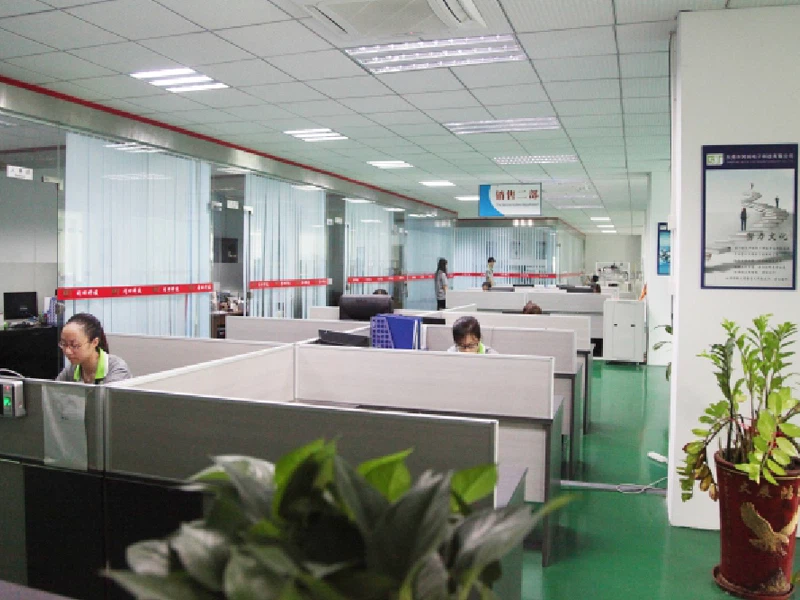
Our Factory
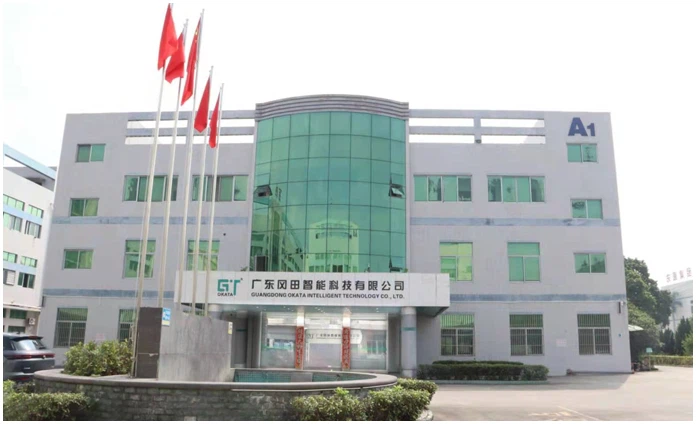
Okata has been adhering to the development philosophy of "integrity, professionalism, cooperation and mutual benefit" and is committed to building a century brand of high-end manufacturing. With the perfect balance of performance and price, we constantly pursue high-quality and high-efficiency products to serve both domestic and foreign customers, and ultimately become an outstanding enterprise respected by society.
Our products are widely used in electrical and electronics, high-end 3C products, 5G communications, automotive electronics, intelligent terminals, display, new energy, energy storage and other industries. We provide the most competitive solutions and cost-effective professional equipment for domestic and foreign well-known enterprises, and have successfully customized thousands of fully automatic production lines for customers.
FAQ
We're well-known as one of the leading soldering machine manufacturers and suppliers in China. Please feel free to buy high quality soldering machine for sale here from our factory. For more information, contact us now.
laser soldering machine for pcb, online automatic soldering machine, laser soldering machine for solder paste