
Why choose us?
Modern techniques
We actively learn and adopt the advanced technology of various countries, combining the high precision of the new technology developed by our company, and according to the customer's problems, so as to develop automation equipment machines suitable for customers.
Fast delivery
After both sides sign the contract, all equipment will be delivered in 1-10 days except for non-standard equipment, which is determined on specific situation!
Safe and secure
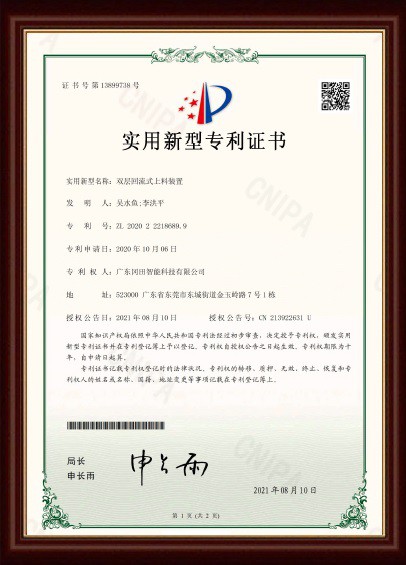
We have been certified as a national high-tech enterprise for many consecutive years and owns more than 70 patents, including more than 30 invention patents and software copyrights.
Strict quality control
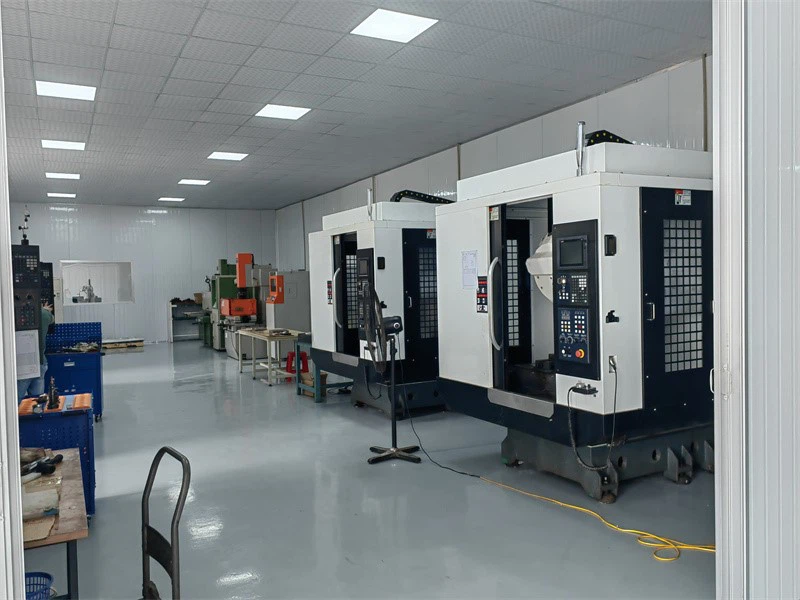
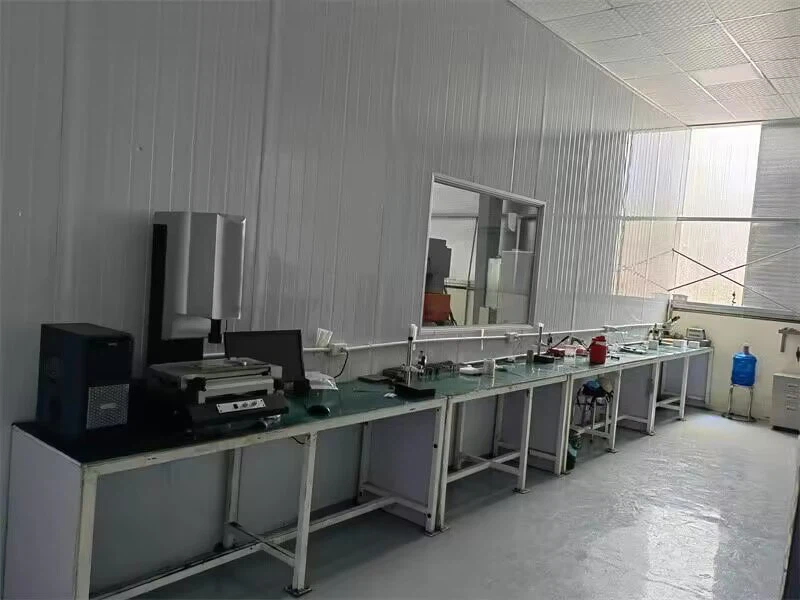
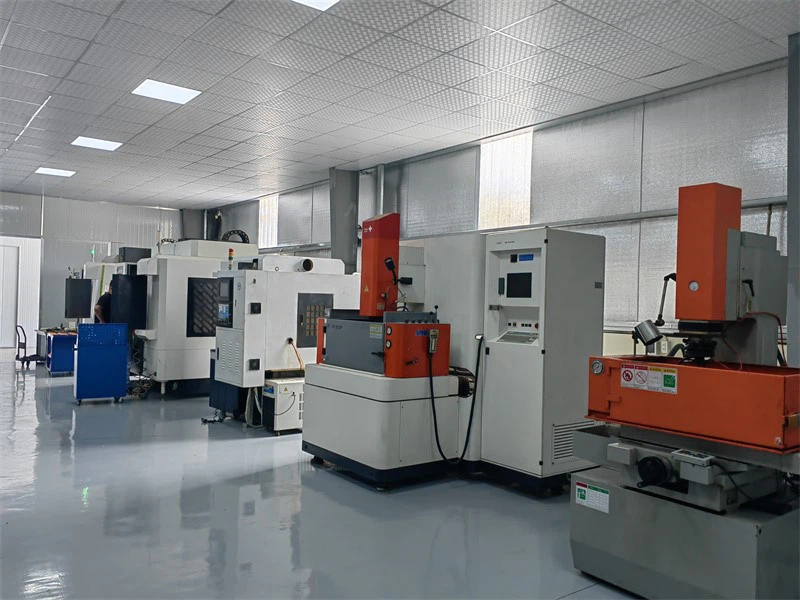
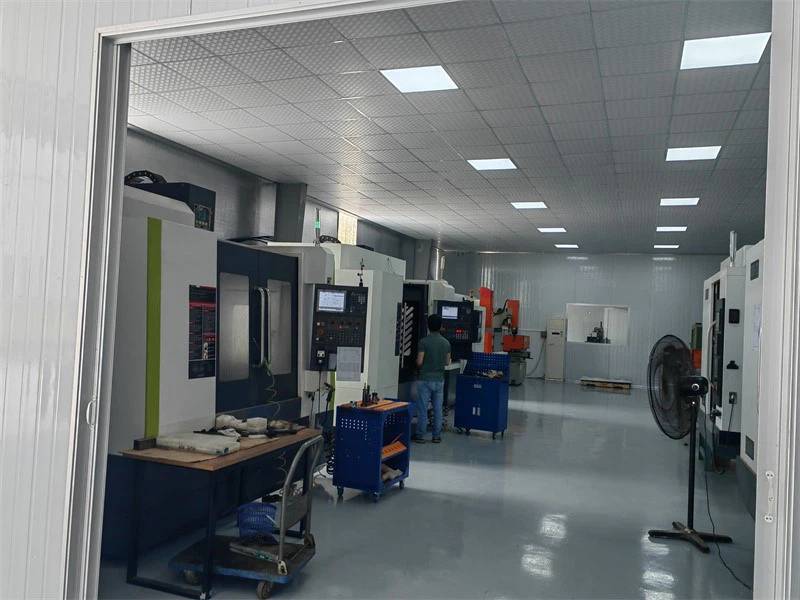
We have our own processing workshop and testing instruments. Our equipment testing process is strict, including raw material testing, production process testing, and joint testing by various departments before shipment, with layers of checking.

An automatic screwdriver robot is a sophisticated robotic system designed to automate the process of screwing or unscrewing bolts, nuts, or screws in various applications. These robots are equipped with advanced technologies and precision mechanics to perform repetitive tasks with high accuracy and efficiency, reducing manual labor and improving overall productivity in industries that require fastening operations.
Benefits of Automatic Screwdriving Robot
Easy programming
As mentioned, programming a traditional screw solution is a time-consuming task that often requires hiring outside robotics expertise. Cobots come with a simple programming interface that anyone can operate with a laptop, tablet or smartphone. In addition, it is no longer a matter of days to program a robot, but a matter of minutes. A saving of time and money!
More flexibility
Unlike traditional robots, a cobot is flexible. It is easy to convert them to other tasks and, in addition, they can perform multiple types of screw operations. Screwing operations can therefore be automated almost anywhere in the production process.
Improved quality
People are not very good at repetitive work, such as screwdriving. With such a boring task, over time a worker's concentration will weaken and this affects the quality of the work. A robot will always perform its action in the same way, with the same force. Therefore, the quality of your product will always remain constant.
Reliability
Manual screwing brings a certain inconsistency and it is difficult to rely on it 100%. Other steps in the production process can get into trouble as a result, for example because the cycle time varies depending on the person performing the task. A robot is more reliable and works constantly.
Rapid deployment
Whereas the implementation of a traditional robot often takes months, a cobot can be deployed within a few days. This makes the payback period a lot shorter and limits downtime for other activities.
Fewer injuries
One major problem that manual screwing presents is that over time it can impact a worker's body. Musculoskeletal disorders, such as carpal tunnel syndrome, can occur over time due to screwing. Robots take over the harmful work from the worker leading to less sick leave and better quality work.
Little space required
Compared to traditional robots, collaborative robots take up little space because they are compact lightweight robots. In addition, a collaborative robot is suitable to be in the same work space as humans and does not need to be shielded with large fences.
Fast ROI
Unlike a traditional robot, the Return On Investment is incredibly fast. This is partly due to the low investment costs, cobots are generally a lot cheaper. Whereas with a traditional robot system it can take several years before it pays for itself. With collaborative robots, depending on the application, this can be reduced to a few months.
Extremely accurate
Not only is a robot more constant than a human, it is also more precise. Whereas humans are good at dealing with variability, robots are extremely precise. For example, collaborative robots have a position replicability of less than a millimeter. For screws, this characteristic is more than suitable and it reduces the margin of error.
Application of Automatic Screwdriving Robot
Manufacturing
Automatic screwdriver robots can be used for various assembly work on production lines, such as the assembly of mobile phones, computers, household appliances, and other products, to improve production efficiency and product quality.
01
Electronic industry
Automatic screwdriver robots can be used for the manufacturing and assembly of semiconductor chips, improving production efficiency and product quality.
02
Automotive industry
Automatic screwdriver robots can be used for the assembly of automotive components, such as the installation of engines, chassis, and other components, to improve production efficiency and product quality.
03
Medical industry
Automatic screwdriver robots can be used for the manufacturing and assembly of medical equipment, such as surgical instruments, medical instruments, and other products, to improve production efficiency and product quality.
04
Construction industry
Automatic screwdriver robots can be used for the processing and installation of building materials, such as steel structures, aluminum alloy doors and windows, and other products, to improve construction efficiency and quality.
05
How to Implement Your Automatic Screwdriving Robot Application?
It all starts by figuring out your needs and what you want to improve in your manufacturing line. Are you looking to :
●Improve screwdriving consistency and output quality ?
●Increase throughput in your screwdriving processes ?
●Enable flexible screwdriving processes for small batches and frequent changeovers ?
●Improve your employees’ working conditions and freeing them up for more high-value tasks ?
When you know the main goals of your automation project, the choosing gets easier.
To find the right automation solutions, you need to take many elements into considerations :
●Technical specifications: Has your robot enough torque accuracy, reach, and speed to fit your screwdriving requirements? Does the screwdriver handle your screw types and length?
●Flexibility: Is it easy to switch from one setting to another? Does your screwdriving system automate positioning, error detection, and torque sensing?
●User experience: Is your screwdriving solution easy to program, deploy and set up on new configurations? Does it need technical skills or not?
●Safety: What are the safety features of your robotic screwdriving system? Does it prevent collision with the robot arm, but also screws?
Even though cobots are technically safe, you still need to do a safety assessment of your screwdriving process. It’s your responsibility to make sure your screwdriving system is in good use and that it doesn’t pose any threat to your workers.
The danger of screwdriving applications mainly comes from collisions with screws and arm tooling. So you need to consider every interaction between your workers, robot arms, screw, and screwing tools.
Getting a robotic screwdriving system is not one more addition to your manufacturing line. You need to completely redefine your workspace and labor organization. For example, you can ease cooperation between your screwdriving robots and workers thanks to a customized working cell. You can also facilitate workers’ and robot movements in and out. That way, your workers can easily come to check your robot’s work and get back to other priorities.
Furthermore, as your robot will drive screws, who will supervise it, and what will screwdriver workers do? Will they monitor its work, manage changeovers, or handle other tasks?
We recommend leveraging human-machine collaboration – where robots continuously operate and workers monitor their work and are ready to intervene in any unexpected situation so that you get the best of both.
Another priority is to make sure your employees know how to use this new automation solution. Even though collaborative robots are often easy-to-use devices, they still need to know how it works and how they can handle them. The training should particularly emphasize coding features and safety protocols. This will make sure employees are confident in their new robotic job.
Have all your questions about screwdriving robots been met ? It’s time for you to set up your screwdriving robotic solution !
Robotic arm
The robotic arm is the core component of an automatic screwdriver robot. It is responsible for the precise movement and positioning of the screwdriver tool. Modern robotic arms are often equipped with multiple joints and an end effector, which holds the screwdriver and maneuvers it into the correct position.
Screwdriver tool
The screwdriver tool attached to the end effector is designed to accommodate different types and sizes of screws. It can be customized based on the specific requirements of the application, ensuring flexibility in handling various products.
Vision system
Many automatic screwdriver robots are integrated with a vision system, including cameras and sensors. This system enables the robot to identify the location and orientation of the screws, ensuring accurate placement and alignment. Vision systems also contribute to adaptability, allowing the robot to work with a variety of products.
Control system
The control system is the brain of the automatic screwdriver robot. It includes hardware and software components that manage the robot’s movements, communication with other devices, and coordination of the entire screwdriving process. Advanced control systems may incorporate machine learning algorithms for adaptive and self-improving capabilities.
Programming interface
To set up and customize the robot for specific tasks, operators use a programming interface. This interface allows users to define the sequence of screwdriving operations, adjust parameters, and program the robot’s movements. Some systems offer user-friendly interfaces that do not require extensive programming knowledge.
How to Maintain Automatic Screwdriving Robot
Optimized screwdriving feeding systems improve cycle time. Make sure the automated screwdriving equipment manufacturer you’re looking to partner with knows your current cycle time, dwell time and target cycle time requirements up front.
Prior to guaranteeing output, your partner should identify any potential bottlenecks and issues before you set the layout of the feeders. Ideally, an automated screwdriving partner should see the operation firsthand. This will allow them to make recommendations, like maybe you should have more than one feeder for an assembly line that requires 60-80 cycles per minute.
They also have the opportunity to make recommendations to accommodate your unique facility footprint, like opportunities to keep the screwdriving head strokes short. For applications that produce products at 60 cycles a minute, you don't want more than three feet of tubing in order to maximize cycle times. There are hundreds of recommendations that can be made to optimize your automated feeding and screwdriving solution.
The bit stroke is the path which the tool travels during the screwdriving process from the resting position until it has reached the screwdriving head. To improve cycle times, you can shorten the bit stroke by reducing the distance between the screwdriver and the part. Every WEBER system reduces the bit stroke when possible to shorten the distance to successful place a screw and improve cycle time. Automated screwdriving partners can also utilize a slide that keeps the device in place without retracting unless there is a failure.
For example, if a thousand good parts feed through the system, the screwdriver will remain in place to drive the screws. When the system detects a failure, that is when the arm will retract to allow personnel to address the issue.
Speed and accuracy typically don’t fit together. You need the analog depth sensor that tracks the angle, depth, and torque of a placed screw. WEBER is the only automated screwdriving equipment manufacturer that offers an analog depth sensor that takes into account all three factors. Accurately drive every screw with precision to improve cycle times.
Certifications



Our Factory
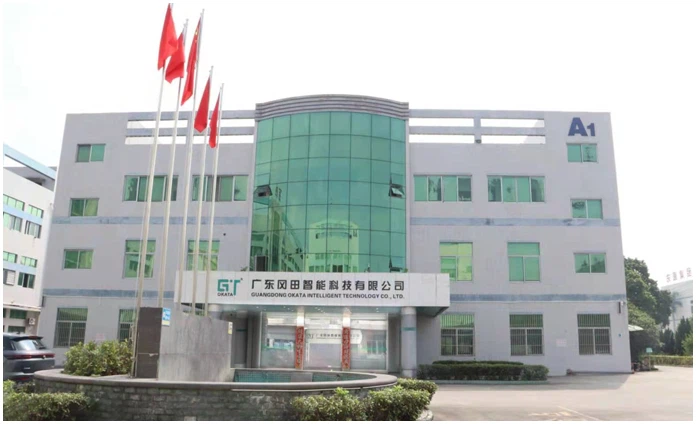
Okata has been adhering to the development philosophy of "integrity, professionalism, cooperation and mutual benefit" and is committed to building a century brand of high-end manufacturing. With the perfect balance of performance and price, we constantly pursue high-quality and high-efficiency products to serve both domestic and foreign customers, and ultimately become an outstanding enterprise respected by society.
Our products are widely used in electrical and electronics, high-end 3C products, 5G communications, automotive electronics, intelligent terminals, display, new energy, energy storage and other industries. We provide the most competitive solutions and cost-effective professional equipment for domestic and foreign well-known enterprises, and have successfully customized thousands of fully automatic production lines for customers.

FAQ
We're well-known as one of the leading automatic screwdriving robot manufacturers and suppliers in China. Please feel free to buy high quality automatic screwdriving robot for sale here from our factory. For more information, contact us now.
automatic 4 axis screwdriving robot, 4 axis robot, automatic screwdriving robot