
In today's thriving manufacturing sector, automatic assembly lines have become a crucial force for enhancing production efficiency and reducing labor costs. However, many customers have numerous questions when they first encounter this advanced technology.
Customer Questions and Solutions
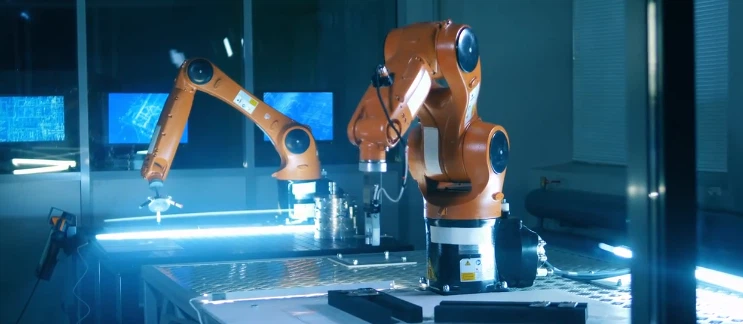
Many customers ask, "Can automatic assembly lines fully replace manual labor?" The answer is that in specific scenarios, they can. For instance, in the automotive manufacturing industry, robots on automatic assembly lines can accurately perform tasks such as welding and installing parts, with efficiency and precision far exceeding that of manual operations. However, we must also acknowledge that in some small-batch, multi-variety production environments, completely replacing manual labor may not be feasible, and human-machine collaboration is needed to achieve optimal production results. In response to customers' concerns about product compatibility, automatic assembly line suppliers typically offer customized services. By engaging in in-depth communication with customers about product characteristics, production processes, and other details, engineers can design assembly lines tailored to specific products, ensuring smooth connections at every stage.
Application Scenarios and Purposes
Automatic assembly lines have a wide range of application scenarios. In the electronics and electrical appliances sector, from smartphones to household appliances, automatic assembly lines can demonstrate their capabilities. For example, in smartphone production, automatic assembly lines can quickly and accurately complete complex processes such as chip installation and screen assembly, not only increasing production speed but also effectively reducing defect rates. In the food processing industry, automatic assembly lines can be used in packaging processes, ensuring consistency and efficiency in operations like sealing and labeling, and meeting consumers' requirements for food safety and packaging aesthetics.

Full Analysis of the Usage Process
When customers use automatic assembly lines, they first need to install and debug the equipment. Suppliers will send professional teams to the site to install the equipment reasonably based on the layout of the customer's factory and production needs, and conduct repeated debugging to ensure the assembly line operates at its best. During daily operations, workers only need to place raw materials or parts in designated positions, and the automatic assembly line will automatically complete the assembly work according to the preset program. During this process, the system will continuously monitor the equipment's operating status, and if any abnormalities are detected, it will immediately trigger an alarm for timely maintenance.
Innovation and Tradition in Production Processes
The production process of automatic assembly lines combines the essence of traditional processes with modern technological innovation. On one hand, it inherits the strict requirements of traditional assembly processes for precision and quality; on the other hand, it uses advanced sensor technology, robotic technology, and other means to achieve a more efficient and flexible production method. For example, in some high-end equipment manufacturing fields, automatic assembly lines can use high-precision sensors to adjust the assembly force and angle in real-time, ensuring that each part fits together perfectly.
Comprehensive After-sales Service Guarantees
Quality after-sales service is an important part of the value of automatic assembly lines. Suppliers typically offer regular maintenance services for equipment, with professional technicians performing inspections, cleaning, lubrication, and other operations on the equipment according to a set plan to extend its service life. In terms of repair response, once a customer encounters equipment failure, the supplier will respond within a short time, restoring production as soon as possible through remote guidance or on-site repairs. At the same time, suppliers also regularly follow up with customers, collect feedback, and continuously optimize products and services.
Automatic assembly lines are rapidly transforming the face of manufacturing. They not only solve problems for customers such as production efficiency and product quality but also continuously create value through innovative production processes and comprehensive after-sales services. In the future, with continuous technological advancements, automatic assembly lines will showcase their infinite potential in more fields and lead manufacturing towards new heights.
 OKATA was established in 2005, with "Intelligent Manufacturing, Smart Factory" as the core, focusing on the research and development of automatic production lines and automation equipment and other core technologies of intelligent manufacturing, to provide enterprises with integrated solutions for automated production.
Contact Us
China Tel: 0086-769-33358130
Wechat: 18029123989
Vietnam Tel: 0084-363676659
Zalo: 0363676659
Website: www.gtokata.com
Youtube: gtokata
E-mail: lhp@gtokata.com
Facebook: gtokata
Douyin: 广东冈田智能科技有限公司
TikTok: gtokata
Add1: NO.7 Jinyuling Road, Dongcheng District, Dongguan City ,Guangdong, China
Add2: HD113, Vinhomes Marina, Le Chan District, Hai Phong City, Viet Nam